


7 products
7 products
7 products


Designed to fit your campervan travel style
Life on the road is unpredictable. Weather changes, power demands increase. Some nights you'll have access to power, other nights you won't. Vatrer lithium RV batteries are designed to keep your energy system stable, flexible and manageable, so you can focus on the journey itself, not on power.

Flexible battery options

Scalable system design

Smart BMS Protection

Low-temperature charging protection

Self-heating function for winter travel

Solar Panel-Inverter Compatibility

Lightweight and compact

Waterproof and durable construction

Bluetooth Remote Monitoring
Vatrer Lithium Battery for All Your RV Needs
Every RV has a different story to tell. Some are built for long stretches of highway, some for mountain roads, and others are designed for quiet nights far from any campground. Wherever the road takes you, Vatrer lithium RV batteries are built to support your travel style.


How much battery capacity do I need for my RV?
The power you need depends on the type of RV you own. Understanding your RV battery size helps you select the right configuration for your actual energy consumption. When choosing a Vatrer lithium RV battery, we recommend a 20% to 30% safety margin to accommodate unexpected demand and ensure comfort even when off-grid.
Real-world RV Installations and Off-Grid Power Solutions
Watch the video to see how the Vatrer Lithium RV Battery System performs in real-world scenarios.


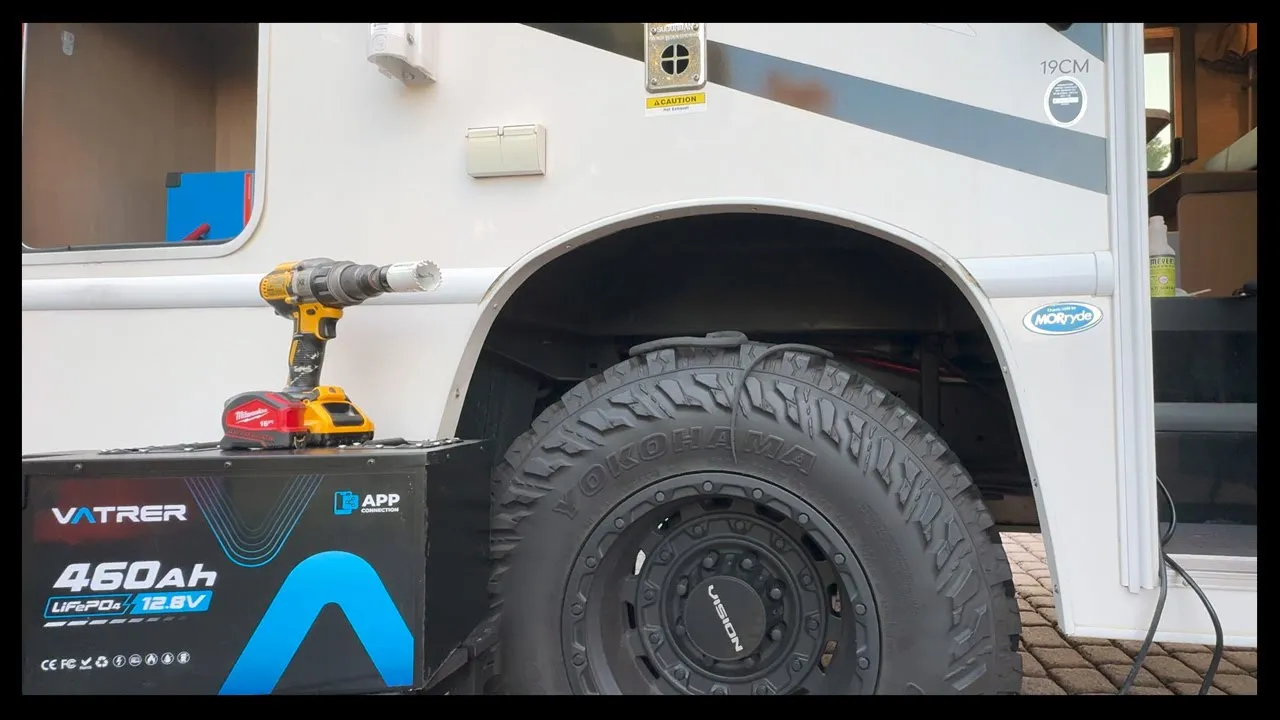
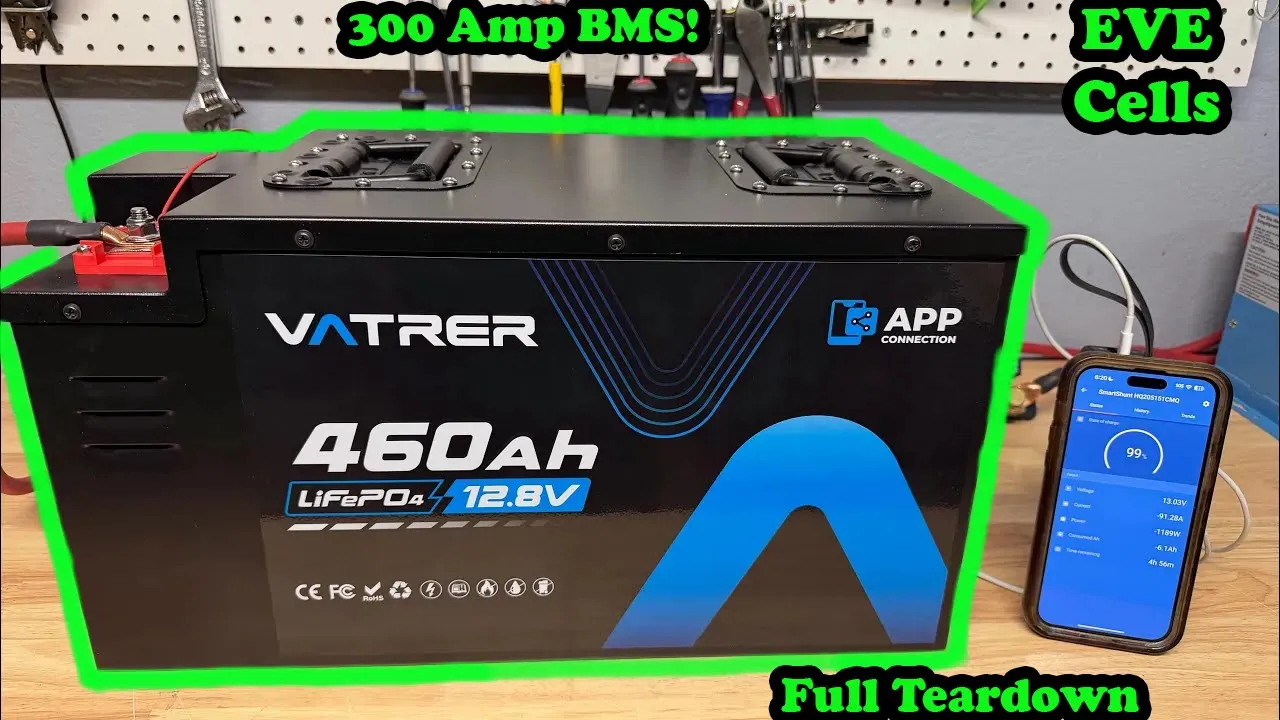

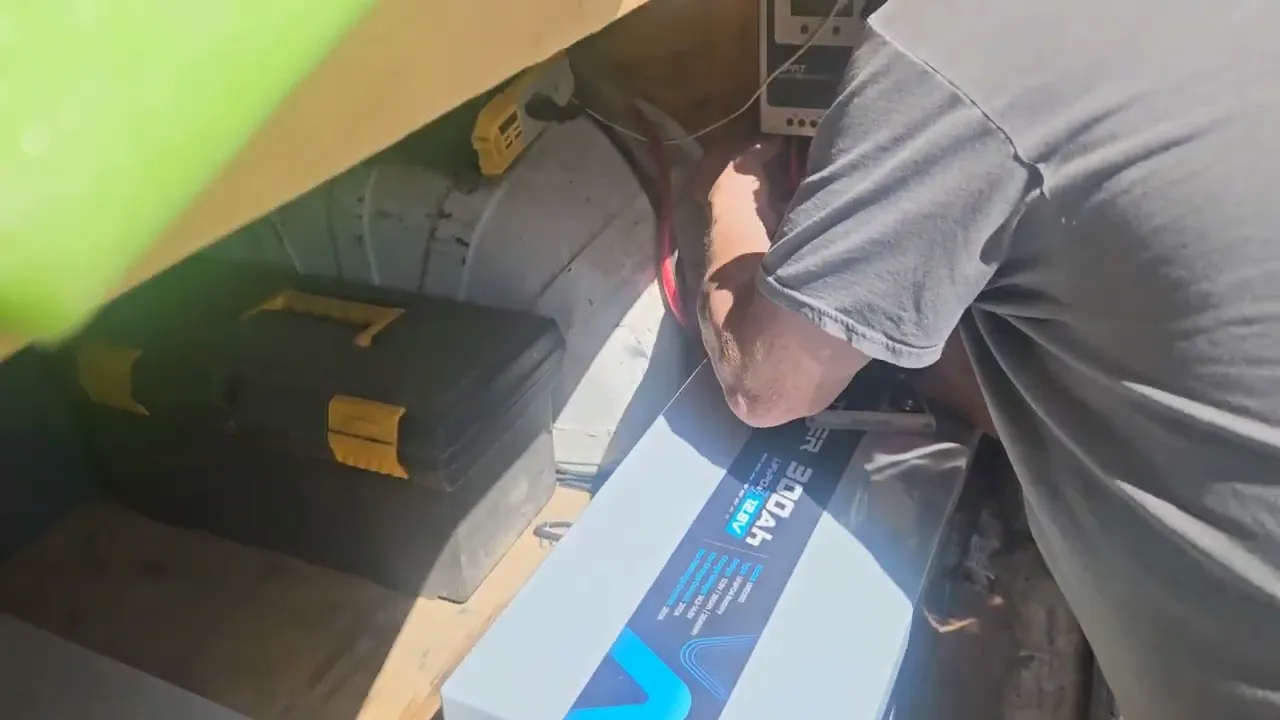
Vatrer Lithium RV Batteries: The Best Fit for Your Travel Style


FAQs
Yes, 12V lithium RV batteries are interchangeable with 12V lead-acid house batteries in most travel trailers, Class B vans, Class C motorhomes, and fifth wheels from brands like Jayco, Forest River, Winnebago, Grand Design, and Airstream. Maintain the same 12V system voltage, connect positive to positive and negative to negative, and use a LiFePO4-compatible converter/charger to achieve a full charge of 14.4V-14.6V. While the original lead-acid converter can provide basic functionality, it often stops charging before the lithium battery reaches 100%.
Yes, because LiFePO4 batteries can draw high currents for extended periods of time compared to lead-acid batteries, a DC-DC charger should be used when charging your lithium RV battery from the alternator of your truck, van, or motorhome. 20A to 60A DC-DC chargers are common in travel trailers and camper vans, while 60A to 100A may be used in larger motorhomes depending on the alternator capacity.
For a basic 12V RV setup (compressor fridge, LED lights, roof fan, water pump, device charging), a 12V 100Ah lithium RV battery provides approximately 1,280Wh of power, while a 12V 300Ah battery provides around 3,840Wh. If you use a 100W fan for 6 hours, a 300W fridge for 8 hours, and 50W LED lights for 5 hours, your daily consumption will be approximately 3.25kWh. In this scenario, one 12V 300Ah battery or two 12V 100Ah batteries in parallel would be suitable, allowing for about 1-2 days of off-grid use without solar.
Yes, but your battery bank and inverter must be sized to accommodate the AC load. A 13,500 BTU RV AC unit typically requires around 1,200W–1,800W of running power and a much larger starting surge current unless it has a soft starter installed. A single Vatrer 12V 300Ah battery provides 3,840Wh and up to 2,560W of continuous output, while our 12V 460Ah and 12V 560Ah/600Ah models support up to 3,840W continuous output. For actual AC usage, combine a 2,000W–3,000W pure sine wave inverter with at least 300Ah–600Ah of lithium capacity.
The Vatrer 12V 100Ah Group 24 model, at 26*16.8*21.2cm and weighing 10.65kg, fits snugly into many standard Group 24 RV trays. Larger options require more space: the 12V 300Ah mini is 38.4*19.4*24.8cm, the 12V 460Ah heated model is 47.7*27.3*25.2cm, and the 12V 600Ah is 63.5*24.4*22cm. Before selecting a battery size, be sure to measure your tray's length, width, and height, as well as lid clearance, cable bend space, and hold-down strap location.
Yes, LiFePO4 RV batteries can be installed inside pass-through storage compartments, provided they are securely fastened, protected from impact caused by shifting cargo, and wired with appropriate fuses, cable gauges, and strain relief. This is often done, particularly in travel trailers, when the front tongue tray is too small for lithium batteries. Batteries should be installed away from direct splashing water, sharp metal edges, propane storage compartments, and unventilated heat sources.
No, you should not mix lithium RV batteries and lead-acid batteries in the same parallel or series house battery bank because they have different resting voltages, charging profiles, internal resistance, and usable depths of discharge. While 12V LiFePO4 batteries typically charge at 14.4V-14.6V, many lead-acid chargers have different methods of float and absorption charging which will lead to imbalances and a reduced usable capacity. Always replace your battery bank with all the same chemistry type (all lithium, or all lead-acid).
Vatrer 24V lithium batteries are designed for minimal maintenance, thanks to their lack of memory effect and built-in Battery Management System (BMS). Unlike lead-acid batteries, they don't require regular watering or equalization. To maximize their lifespan, store them in a cool, dry place when not in use, and avoid extreme temperatures beyond the protection provided by the BMS.
Yes, lithium RV batteries can be charged by all of these as long as each charging source (solar, shore power, generator, alternator) uses a LiFePO4 compatible charging profile. For 12V LiFePO4 RV batteries, set the absorption voltage to approximately 14.4V-14.6V and disable equalization charging. If using shore power, use a lithium-compatible converter/charger or inverter/charger.
Store your lithium RV battery in a dry place at approximately a 50% state of charge (SOC). Ideally, between 50°F-95°F (approx. 10°C-35°C), and disconnect all parasitic loads (standby power consumption). Vatrer Lithium RV batteries can be discharged between -4°F and 140°F (approx. -20°C and 60°C), but charging is optimized between 32°F and 122°F (approx. 0°C and 50°C). Avoid storing at extreme temperatures, keep out of direct sunlight, and maintain an SOC of approximately 50%. When storing your RV for winter, check the SOC every 2-3 months and recharge before it drops too low.
Other recommended Vatrer batteries


Blog Center


- 信頼性の高い電力で、生活を豊かに。
- 信頼性の高い電力供給とLiFePO4技術をリードし、生活を支え、持続可能な世界のエネルギー開発を推進します。